Barricades vs Cones vs Barrels: Choosing the Right Tool
Understanding Traffic Control Tools

Traffic control is essential on roads across Ontario. Construction zones, road repairs, and public events all need clear guidance for drivers. Without proper setup, traffic becomes unsafe and confusing. This is why choosing the right tool matters. The most common tools include Barricades, Traffic Safety Cones, and Traffic Barrels. Each one has a specific purpose. Each one works best in certain situations.
Using the wrong device can reduce safety. Using the right one improves traffic flow and protects workers. A strong traffic control plan always starts with the correct equipment.
What Are Traffic Safety Cones?
Traffic Safety Cones are the most common tool on the road. They are lightweight, bright, and easy to move. Workers use them to guide traffic through short-term or low-risk areas. You often see them during small repairs, utility work, or temporary lane shifts.
Traffic Safety Cones work best in areas with lower speeds. They provide clear visual guidance but do not offer physical protection. Drivers can move around them easily. This makes them ideal for quick setups and short projects. Many contractors choose to use or rent them for flexibility.
However, cones must be placed correctly. Spacing and visibility are key. Reflective collars are important for night use. When used properly, Traffic Safety Cones help create smooth and organized traffic flow.
What Are Traffic Barrels?
Traffic Barrels are larger and more visible than cones. They are also called construction barrels or traffic drums. In Ontario, many projects use TC54 Traffic Barrels for high-visibility zones.
Traffic Barrels are designed for higher-speed roads. Their size makes them easier to see from a distance. This gives drivers more time to react. Many barrels include reflective bands and warning lights. This improves visibility in all conditions.
Traffic Barrels are also more stable than cones. They can handle strong wind and heavy traffic. If a vehicle hits them, they are designed to absorb impact and bounce instead of causing damage. This makes them safer for both drivers and workers.
These features make Traffic Barrels ideal for highway work, long-term construction, and busy urban roads.
What Are Barricades?
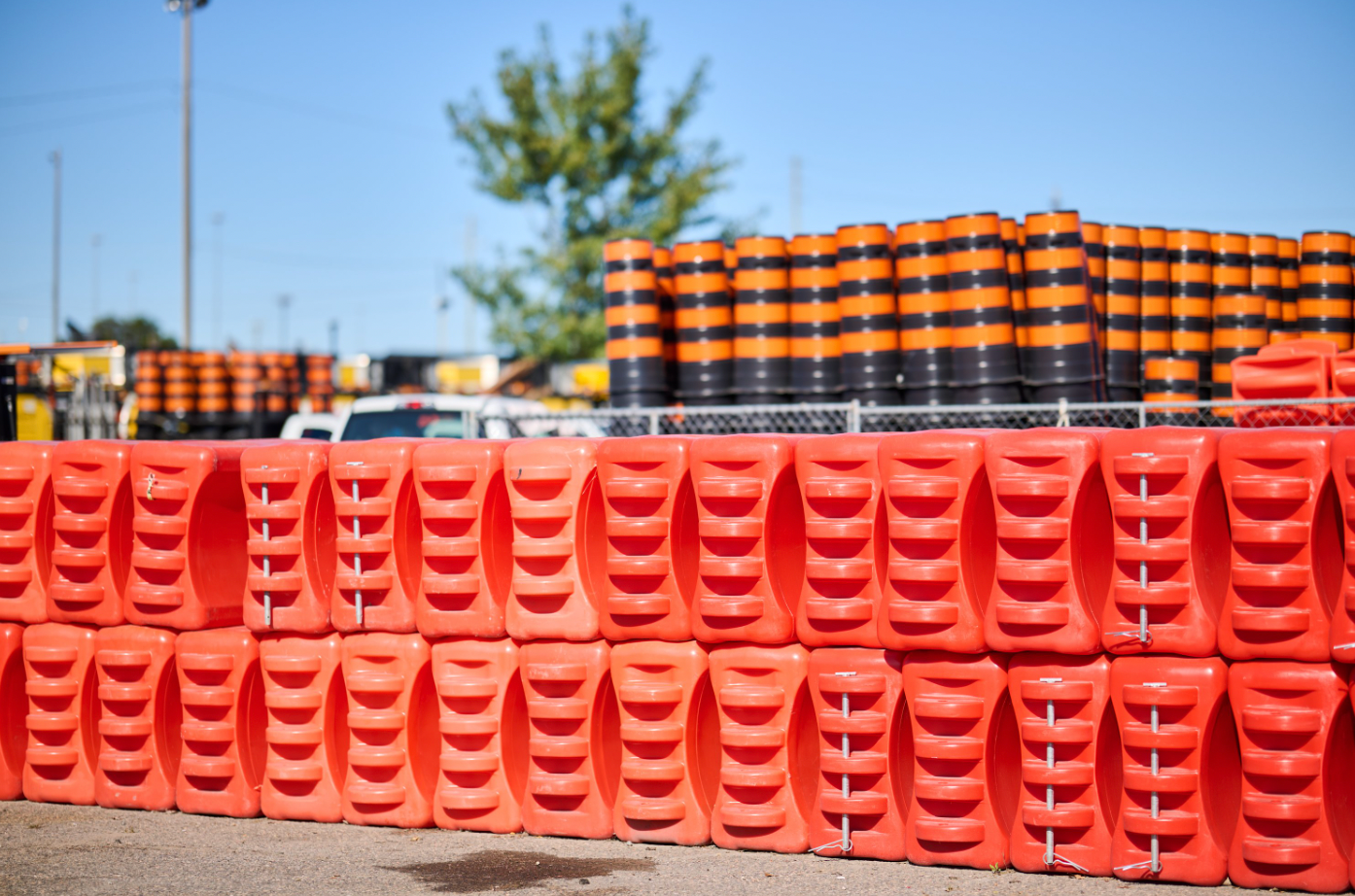
Barricades are strong and durable traffic control devices. They provide both visual and physical protection. Unlike cones and barrels, Barricades can block access completely. They are used to close roads, restrict entry, or protect work zones.
Barricades come in different types. Some are lightweight for temporary use. Others, like concrete barriers, offer heavy-duty protection. These are often used on highways and major construction sites.
Barricades create clear boundaries. They prevent vehicles from entering dangerous areas. This makes them essential for high-risk zones where worker safety is critical. They are also used during events to control crowds and vehicle movement.
Comparing Visibility and Safety

Visibility is one of the most important factors in traffic control. Drivers must see and understand the setup quickly. Traffic Safety Cones offer good visibility in daylight. Traffic Barrels provide higher visibility due to their size and reflective surfaces. Barricades offer strong visibility and clear physical presence.
Safety also depends on the level of protection needed. Cones guide traffic but do not stop vehicles. Traffic Barrels offer better impact resistance. Barricades provide the highest level of protection by creating a solid barrier.
Choosing between these tools depends on the level of risk. Higher speed and higher risk require stronger protection.
Choosing the Right Tool for the Job
The right choice depends on the project type. For short-term work or low-speed zones, Traffic Safety Cones are often enough. They are quick to install and easy to adjust. They work well for temporary lane guidance.
For medium to high-speed areas, Traffic Barrels are a better choice. They improve visibility and provide more stability. They help manage traffic in more demanding conditions.
For road closures, restricted areas, or high-risk work zones, Barricades are the best option. They create a clear and strong boundary. They protect both workers and the public.
Many projects use a combination of all three. For example, cones may guide traffic into a lane shift. Barrels may define the work zone. Barricades may block off restricted areas. This layered approach creates a complete traffic control system.
The Importance of Proper Setup
Even the best equipment will fail if it is not set up correctly. Proper placement, spacing, and alignment are critical. Devices must follow Ontario traffic control standards. They must also be checked regularly to ensure they remain effective.
Weather, traffic, and time can affect setup. Cones can move. Barrels can shift. Barricades can be damaged. Regular inspection keeps the work zone safe and organized.
Professional traffic control teams understand these challenges. They design layouts that match road conditions and project needs. This ensures every device works as intended.
Supporting Safe Traffic Flow in Ontario
Ontario roads are busy and constantly changing. Construction and maintenance projects are part of everyday life. Proper traffic control keeps these projects safe and efficient.
Barricades, Traffic Safety Cones, and Traffic Barrels all play important roles. Each tool has its strengths. Each tool serves a specific purpose. Choosing the right one improves safety, reduces confusion, and keeps traffic moving smoothly.
There is no one-size-fits-all solution in traffic control. The best results come from using the right tool in the right situation. Traffic Safety Cones offer flexibility. Traffic Barrels provide visibility and stability. Barricades deliver strong protection.
Understanding these differences helps create safer work zones across Ontario. With proper planning and the right equipment, every project can achieve safe and e