

Concrete barriers play an important role in protecting construction workers, motorists, pedestrians, and the public around active work zones. Whether you are managing a highway construction project, road repair, or a temporary traffic control setup, choosing the right concrete barrier helps create a safer and more organized work environment.
Barricade Traffic Services provides Temporary Concrete Barriers (TCB) designed for durability, reliable traffic control, and protection on construction projects. Our concrete barrier solutions help separate traffic from work areas, establish secure perimeters, and reduce the risk of vehicles entering restricted zones.
What Are Concrete Jersey Barriers?
Concrete jersey barriers are heavy-duty concrete structures used to separate traffic lanes, protect construction zones, and create physical boundaries between vehicles and work areas. They are commonly found on highways, roads, bridges, and large construction sites.
A jersey barrier is designed with a specific sloped profile that helps redirect vehicles upon impact. Its shape makes it a widely used option for traffic separation and roadside protection.
These barriers are particularly useful when temporary traffic control requires a strong physical separation rather than signs, cones, or lightweight barricades alone.
What Is a Temporary Concrete Barrier (TCB)?
A TCB, or Temporary Concrete Barrier, is a concrete safety barrier designed for temporary use during construction, road maintenance, and infrastructure projects.
Unlike permanent concrete installations, temporary barriers can be positioned to suit changing construction requirements. They provide a physical separation between active work zones and moving traffic while helping contractors manage site access and traffic flow.
Barricade Traffic Services offers Concrete Barrier Wall (TCB) systems built for demanding construction environments. Each unit weighs approximately 2,673 kg (5,893 lbs.), providing a substantial physical barrier for work zone protection.
Our TCB system also features:
- System configuration meeting MCHRP Report 350 TL-3.
- JJ Hook Connection proprietary to East-Set Industries Inc.
- Compliance with OPSS 1352, 1989 (Special Provision No. 740S03, 2011).
- A low installation cost compared with other systems.
Where Are Jersey Wall Barriers Used?
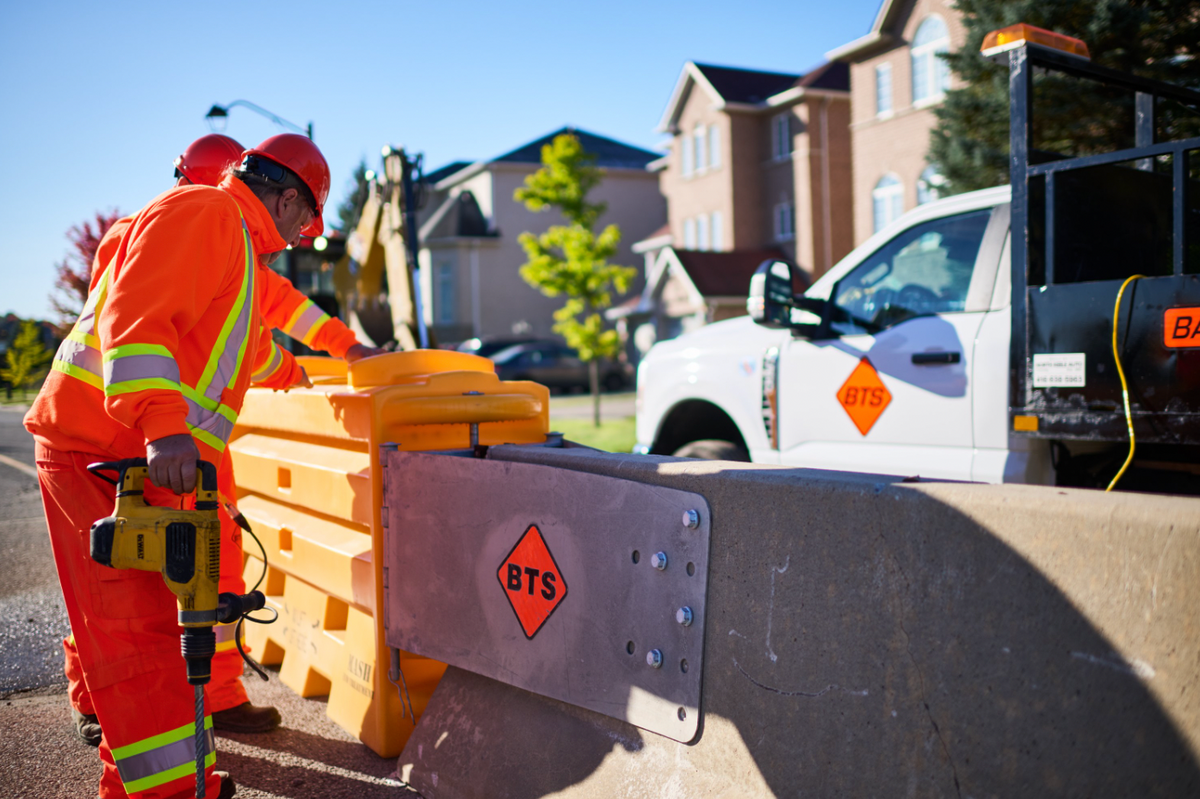
Jersey wall barriers are used across a wide range of construction and traffic management projects. Their weight and durable concrete construction make them suitable for environments where a strong physical separation is required.
Common applications include:
Highway Construction: Concrete barriers separate active construction areas from passing vehicles. They help establish clear boundaries and protect workers during highway repairs and upgrades.
Roadwork and Maintenance: Contractors use concrete jersey barriers to create temporary work zones during road repairs, resurfacing, and infrastructure improvements.
Bridge Construction: Jersey barriers provide physical separation around bridge work areas where space is limited and traffic must continue moving safely.
Traffic Lane Separation: TCB systems help divide traffic lanes and establish temporary traffic patterns during construction and road closures.
Construction Site Security: Concrete barriers create secure perimeters around restricted areas, equipment, and ongoing construction projects.
Benefits of Using Concrete Barriers for Traffic Control
Choosing the right concrete barrier system can make a significant difference in construction site safety and traffic management.
1. Improved Work Zone Protection
Concrete barriers create a physical separation between workers and moving vehicles. This helps reduce the risk of vehicles entering restricted construction areas.
2. Durable Construction
Concrete jersey barriers are built to withstand demanding outdoor conditions. Their heavy construction makes them suitable for long-term roadwork and temporary construction projects.
3. Reliable Traffic Separation
Jersey barriers help establish clear boundaries between active traffic lanes and construction zones. They also help contractors maintain organized traffic patterns as projects progress.
4. Flexible Site Configuration
Temporary concrete barriers can be arranged to suit different project layouts. Contractors can use them to establish work zone boundaries, separate lanes, and secure restricted areas.
5. Cost-Effective Installation
Our TCB system offers a low installation cost compared with other systems. This makes it a practical option for projects that require reliable concrete barrier protection.
Why Choose Barricade Traffic Services for Concrete Barriers?
Barricade Traffic Services provides traffic control equipment and safety solutions for construction and infrastructure projects across Ontario.
Our Concrete Barrier Wall (TCB) is designed to support demanding traffic control requirements. With a unit weight of 2,673 kg (5,893 lbs.), it provides a substantial physical barrier for construction environments.
We understand that every construction project has different requirements. Our team can help you find suitable traffic control equipment based on your project layout, safety requirements, and timeline.
As Ontario's largest Canadian-owned traffic control company, we are committed to providing dependable products and responsive customer service.

THE DIFFERENCE IS SERVICE
We proudly provide the highest level of service to our customers

100% canadian-owned
Ontario's largest Canadian-owned traffic control company.